Car Door Soundproofing | Door Sound Deadening | SDS

AUTOMOTIVE SOUND DEADENING · SYDNEY

Doors Soundproofing

Factory door insulation is often limited. A properly designed multi-layer treatment can reduce road noise, vibration and rattles while creating a more controlled acoustic environment for your speakers

Why treat the doors?

How car door sound deadening works

Many vehicles leave the factory with only small patches of vibration damping inside the doors. That may help with a narrow range of resonance, but it usually does not address the broader mix of road noise, airflow noise, panel vibration and speaker-related resonance that reaches the cabin.

Because the doors make up a large part of the cabin boundary, targeted treatment can reduce noise entering through thin sheet metal and help control the reflections and vibrations inside the door cavity. The best result comes from matching each layer to the vehicle rather than simply adding as much material as possible.

For Sydney driving, this is particularly useful for tyre roar on coarse-chip roads, traffic noise and panel vibration that becomes more noticeable at suburban and motorway speeds.

Installation process

A multi-layer approach to quieter doors

The original page’s installation sequence has been retained, translated and adapted to describe a practical Australian vehicle treatment.

01 • FACTORY DOOR

Inspect, strip and prepare

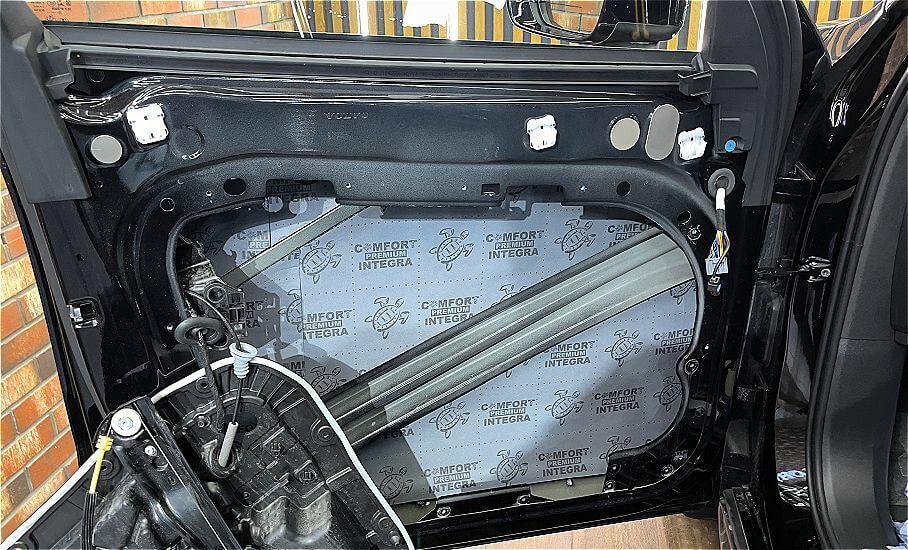
The door trim is carefully removed and the internal surfaces are inspected. Factory damping may cover only small areas and can vary greatly between models. Accessible metal is cleaned and degreased before treatment. Window mechanisms, drains, wiring and service access must remain functional.

02 • FIRST LAYER

Vibration damping

A constrained-layer vibration damper is applied to suitable sections of the outer door skin. The butyl-based layer and foil facing help reduce panel resonance and low-frequency vibration. Correct surface preparation and firm rolling are important for reliable adhesion.

03 • SECOND LAYER

Sound-absorbing or barrier layer

A lightweight moisture-tolerant acoustic layer can then be installed where the door design allows. Its job is different from vibration damping: it helps control reflected sound energy and reduces the transmission of mid- and higher-frequency noise through the door cavity.

04 • INNER SKIN

Control the inner door panel

Where the factory construction permits, additional damping is applied to the inner metal skin. This can reduce residual resonance around the speaker mounting area and make bass reproduction feel tighter. Coverage is adapted to the door structure so that fasteners, airbags and service openings are not compromised.

05 • DOOR TRIM

Absorber and anti-rattle treatment

Selected areas behind the plastic door card can be treated with a flexible acoustic absorber. Contact points and trim edges may also receive anti-rattle tape to reduce squeaks and buzzes. Clips and fasteners are checked before reassembly.

06 • TAILGATE / REAR DOOR

Don’t overlook the rear opening

On hatchbacks, wagons and SUVs, the tailgate is another large resonant panel. When included in a broader package, accessible metal can be vibration-damped and plastic trim can be treated with a suitable absorber using the same principles as the side doors.

Get My Quote

Benefits & considerations

What door sound deadening can change

Benefits

  • Lower perceived road, traffic and panel noise entering through the door area.
  • Reduced metal resonance, trim vibration and some common rattles.
  • More stable speaker mounting environment, often improving bass definition and clarity.
  • Added thermal resistance from some acoustic layers, helping the cabin feel less exposed to outside heat and cold.

Important considerations

  • Adding material increases door weight, so coverage and material selection should be sensible rather than excessive.
  • Poor reassembly can create new squeaks or rattles; clips, fasteners and trim contact points should be checked carefully.
  • Door drains, side-impact systems, wiring and window mechanisms must never be blocked.
  • Results vary by vehicle, tyre type, road surface and the amount of noise entering from the floor, wheel arches, firewall and roof.

Materials

What is used inside a properly treated door?

Different materials solve different NVH problems. Treating every layer as “soundproofing” misses the engineering purpose of each component.

Vibration damper

Butyl-based damping with an aluminium facing is used on metal panels to reduce resonance and structure-borne vibration.

Acoustic absorber / barrier

Closed-cell or engineered acoustic layers can help control reflected sound and airborne noise, with products selected for automotive moisture and temperature conditions.

Anti-rattle treatment

Foam or fabric tape can isolate trim contact points, wiring and clips to reduce squeaks, buzzing and plastic-on-plastic noise.

Car audio

Door treatment can also improve speaker performance

A speaker mounted into a lightly damped metal door can lose energy through panel movement and unwanted reflections.

Reducing resonance around the door skin and speaker mounting area can make bass sound more controlled and vocals cleaner. The largest improvement still depends on the speakers, installation, sealing, amplifier tuning and the vehicle’s original acoustic design.

Car door acoustic treatment around speaker area
Get My Quote

Example projects

Automotive sound deadening projects

Examples retained from the source layout to preserve the visual project-gallery block.

Voyah Dream full vehicle sound deadening project

Voyah Dream

Full vehicle sound deadening

Jetour T2 automotive sound deadening project

Jetour T2

Full vehicle sound deadening

BMW X3 sound deadening project

BMW X3

Full vehicle sound deadening

Volkswagen Teramont sound deadening project

Volkswagen Teramont

Full vehicle sound deadening

Lincoln Navigator targeted sound deadening project

Lincoln Navigator

Targeted sound deadening

Skoda Kodiaq sound deadening project

Skoda Kodiaq

Full vehicle sound deadening

Li Auto L7 targeted sound deadening project

Li Auto L7

Targeted sound deadening

Chery Tiggo 7L sound deadening project

Chery Tiggo 7L

Full vehicle sound deadening

Get My Quote

Sydney service page

Car door sound deadening for Australian roads

Sydney roads can generate plenty of tyre noise, vibration and resonance inside the cabin. Door sound deadening helps reduce unwanted noise entering through the doors while also making the panels feel more solid and controlled.

Door treatment can be completed on its own or combined with sound deadening for the floor, boot, wheel arches and roof for a quieter, more comfortable driving experience.

Service areaSydney, NSW
Vehicle typesCars, SUVs, wagons & vans
Main goalsNoise, vibration & rattle reduction
Audio benefitImproved speaker environment

SDS Car Sound Deadening

Choose the right treatment for the noise in your vehicle

Every car is different. The useful first step is identifying where the unwanted noise is entering the cabin and treating the panels that will make the most meaningful difference.

Get My Quote